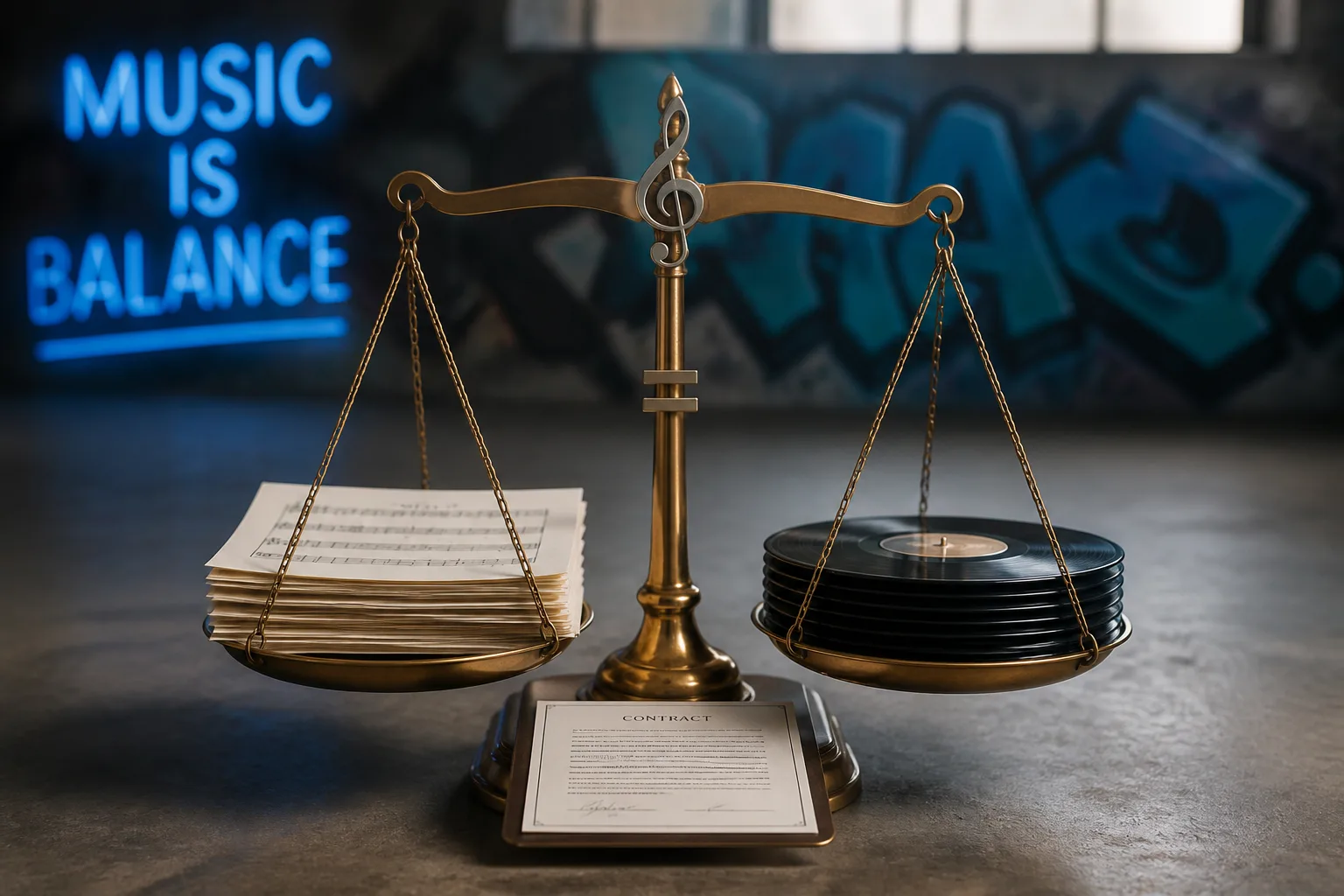
NMPA Secures Industry-Wide Licensing Deal with Udio, Valuing Songs Equally to Recordings
At its annual meeting in New York on June 10, the National Music Publishers’ Association (NMPA) announced a new licensing agreement with the AI‑music platform Udio. The deal, which will take effect on June 15, allows NMPA members to join a framework that values songs and sound recordings on an equal footing for AI training purposes. The agreement follows Udio’s earlier settlement with major labels and marks the first industry‑wide licensing pact with a large AI music company that treats songwriting and recorded performance as interchangeable assets.
Udio, founded in December 2023 by former DeepMind researchers, launched a public beta in April 2024. The platform uses large‑scale neural networks to generate music from text prompts, producing both instrumentation and vocals. In 2024, the Recording Industry Association of America (RIAA) sued Udio and competitor Suno for copyright infringement, alleging that the companies had used copyrighted works without permission. The lawsuit was later settled with Universal Music Group, Warner Music Group, Merlin, and Kobalt, who entered licensing agreements that allowed Udio to use their catalogs for training while receiving royalties. Sony Music remains the only major label still pursuing litigation against Udio.
According to NMPA President and CEO David Israelite, the new deal is significant because it assigns equal value to songs and recordings in AI training. “Songs are just as important, if not more, than sound recordings when it comes to AI training,” Israelite said. The statement reflects a growing recognition that songwriting, which is traditionally protected under separate copyright regimes, is a critical source of data for generative models. By treating the two classes of works equally, the agreement provides a clearer framework for royalty calculations and licensing negotiations.
In addition to the Udio pact, the NMPA confirmed an agreement in principle with KLAY, an AI music platform that focuses on licensed music and interactive listening tools. The KLAY deal is expected to launch later this summer. KLAY’s model relies on curated libraries of pre‑licensed tracks, offering a different approach to data acquisition compared to Udio’s broad‑based training set.
The dual strategy of licensing and litigation signals a pragmatic shift in the industry’s approach to AI. Israelite emphasized that the NMPA will pursue both paths simultaneously. “Licensing against good AI partners and litigating against bad AI actors is not in conflict,” he said. The move acknowledges that while some platforms may misuse copyrighted material, others can operate within a legal framework that compensates rights holders.
Industry observers note that the Udio agreement may influence how other AI music services negotiate with publishers. The deal sets a precedent for valuing songwriting and recordings equally, which could streamline royalty calculations for future licensing agreements. It also provides a template for addressing the enforcement challenges that have emerged as AI models increasingly generate music that closely resembles existing works.
Enforcement remains a key issue. The next battleground will involve verifying that AI training data is obtained through permission rather than scraping. Questions about AI training rights, song valuation, streaming fraud, and fake uploads will need to be resolved through both legal and technical mechanisms. The NMPA’s stance suggests that the industry will continue to develop tools and standards to prove that models are built on licensed content.
The Udio deal also reflects broader trends in the AI music sector. Since the 2024 RIAA lawsuit, several major labels have entered licensing agreements with AI platforms, signaling a shift from litigation to partnership. The agreements typically involve royalty payments to publishers and record labels, and they often include clauses that require the platforms to provide transparency about the data used for training. These developments are part of a larger industry effort to balance innovation with the protection of intellectual property.
As the music industry adapts to generative AI, the NMPA’s licensing framework with Udio represents a concrete step toward integrating AI tools into the existing copyright ecosystem. The agreement provides a model for how publishers can monetize their catalogs while allowing AI platforms to develop new creative tools. The industry will watch closely to see how the deal affects royalty distribution, licensing negotiations, and the enforcement of AI training rights in the months ahead.