From Sun Studio to TikTok: The Enduring Journey of Rockabilly
From the dusty streets of Memphis to the viral feeds of TikTok, rockabilly has kept its bite alive for more than six decades. The genre’s roots lie in a 1950s Southern hybrid of country twang and rhythm‑and‑blues drive, and its current resonance can be heard in pop, indie, and streaming scenes worldwide.
The story begins at Sam Phillips’ Sun Studio, where the producer sought white performers who could translate the feel of the Black R&B he championed. In 1954, Phillips recorded Elvis Presley’s “That’s All Right,” a track that many consider the genre’s Big Bang. Presley’s hillbilly‑influenced vocal delivery and guitar work, coupled with the studio’s raw production, forged a sound that was both new and electrifying.
Early pioneers such as Carl Perkins (“Blue Suede Shoes”), Jerry Lee Lewis, and Johnny Cash helped define rockabilly’s core elements: a driving backbeat, twangy guitars, slap‑back echo, and a vocal twang. The CultureSonar article notes that Wanda Jackson, the “Queen of Rockabilly,” proved the style was not a boys’ club, while Gene Vincent’s “Be‑Bop‑A‑Lula” remains a classic example of the era’s swagger.
By the late 1950s, rockabilly had seeped into mainstream pop, but the British Invasion and polished pop sounds pushed it to the margins. The genre did not disappear; it simply waited for a new spark. In the mid‑1970s, nostalgia for early rock ’n’ roll, fueled by films like American Graffiti and oldies radio, created fertile ground for a revival.
The revival was not a simple re‑creation. Robert Gordon, formerly of the CBGB punk act Tuff Darts, brought fresh energy to the style, collaborating with guitarists Link Wray, Danny Gatton, and Chris Spedding. Meanwhile, the Stray Cats—Brian Setzer’s Gretsch guitar, Lee Rocker’s slap bass, and Slim Jim Phantom’s stand‑up drums—found success first in the UK. Their hits “Rock This Town” and “Stray Cat Strut” were modern classics that retained the vintage engine of early rockabilly.
The UK scene also produced psychobilly, a hybrid that fused rockabilly rhythms with horror‑movie theatrics. The Cramps, for example, pushed the genre into the surreal, demonstrating rockabilly’s adaptability.
Today, rockabilly’s influence is evident across Americana, indie, and pop. Chris Isaak’s “Baby Did a Bad Bad Thing” and JD McPherson’s Signs & Signifiers both borrow from the genre’s clean guitar tones and rhythmic snap. The Brian Setzer Orchestra has taken the style into big‑band arrangements, while contemporary acts such as Reverend Horton Heat, Imelda May, and The Black Keys incorporate slap‑back echo and twangy guitar riffs.
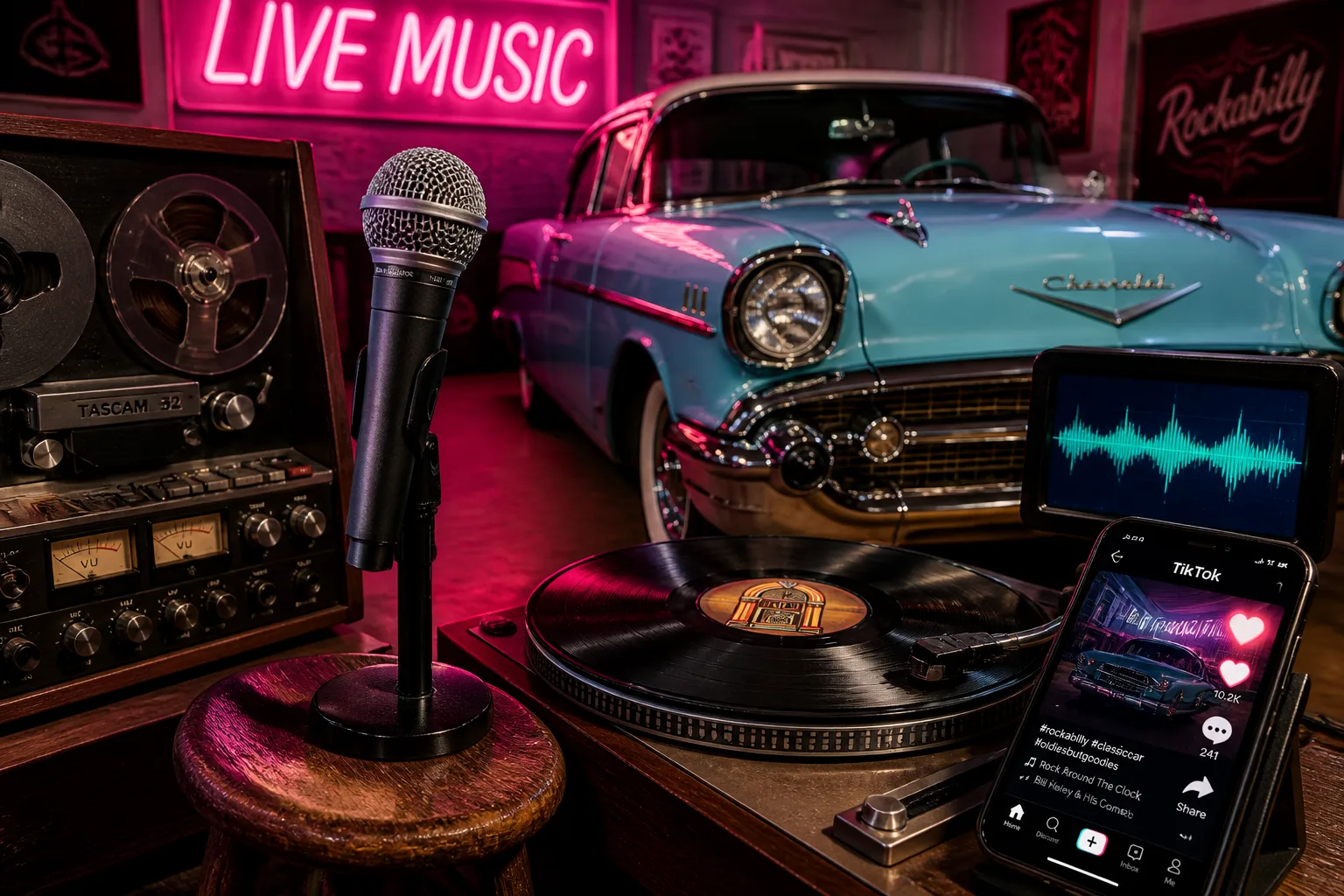
Digital platforms have also helped the genre reach new audiences. TikTok videos featuring vintage fashion, retro dance styles, and classic guitar tones keep rockabilly’s visual and sonic language alive. The genre’s fundamental emphasis on rhythm, attitude, and musical collision continues to resonate with creators who value simplicity and energy.
In sum, rockabilly’s trajectory—from Sun Studio’s early recordings, through a punk‑infused revival, to modern reinterpretations—demonstrates how a genre can survive by continually reinventing itself while staying true to its core elements. The style remains a vibrant part of the global audio ecosystem, influencing producers, musicians, and listeners alike.